
In 2025, the gig economy remains a crucial part of the UK workforce, with delivery drivers representing a significant share of that ecosystem.
Whether it’s delivering groceries, takeaway food, or parcels, thousands of UK-based drivers rely on delivery apps and courier firms for their income. But how much are these drivers really making in 2025?
This blog explores the hourly pay rates of delivery drivers across various companies, the factors influencing their earnings, and what this means for full-time and part-time drivers alike.
What Are the Average Hourly Earnings for UK Delivery Drivers in 2025?

In 2025, delivery driver pay is still influenced by the platform they work for, the delivery type, and the region.
Most delivery drivers in the UK earn an hourly rate that fluctuates between £8.50 and £18, depending on whether they’re delivering food, parcels, or groceries.
Some platforms calculate earnings per delivery, others offer block payments, and a few provide hourly guarantees.
Despite advertised rates, net earnings are often lower after expenses like fuel, maintenance, and insurance.
| Type of Delivery | Average Hourly Earnings (2025) |
| Food Delivery (Uber Eats, Deliveroo) | £8.50 – £14.00 |
| Parcel Delivery (Evri, Amazon Flex) | £10.00 – £18.00 |
| Grocery Delivery (Tesco, Asda) | £10.50 – £16.00 |
Drivers working peak hours or evenings tend to report higher hourly rates, especially during promotional campaigns or surge pricing periods.
What Influences Delivery Driver Pay in the UK?
Delivery driver pay in 2025 is shaped by multiple external and internal factors that determine how much a driver actually earns per hour. While platforms advertise certain rates, the final take‑home figure often depends on real‑world conditions that affect delivery speed, frequency, and operating costs.
Payment Structure of Each Platform
Every delivery company uses its own payment model. Some pay per drop, others include distance-based bonuses, and a few offer hourly guarantees.
Per-delivery systems tend to create unpredictable earnings, especially during slow periods, whereas hourly models offer more stability but may come with stricter shift requirements.
Regional Delivery Demand
Urban zones like London, Birmingham, and Manchester generally offer higher earnings because of dense customer clusters, shorter travel times, and surge periods that occur more often. In contrast, rural areas have fewer orders per hour, longer travel routes, and unpredictable downtime.
Time Slots and Peak Hours
Peak times significantly influence how much a driver can earn. Lunchtime, evenings, and weekends usually produce higher customer demand, which results in better pay. Drivers who target these periods can often outperform those working off‑peak hours.
Delivery Type and Distance
Short, frequent deliveries raise hourly earnings, while long-distance or low-fee deliveries reduce overall profitability. Food delivery drivers often rely on fast, high-volume drops, whereas parcel drivers depend on route efficiency.
How Do Major Delivery Platforms Pay in 2025?
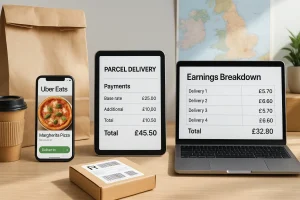
Below is a snapshot of how top delivery companies are compensating their drivers in 2025, reflecting not only hourly rates but also how each platform structures payments.
| Company | Pay Type | Hourly Range |
| Uber Eats | Per delivery + bonuses | £9 – £13 |
| Deliveroo | Per delivery (distance + time) | £8.50 – £12.50 |
| Just Eat | Hourly rate + delivery bonuses (varies) | £10 – £14 |
| Evri | Per parcel with route rate | £11 – £17 |
| Amazon Flex | Pre-booked blocks (3–4 hours) | £13 – £18 |
| DPD | Employed or self-employed model | £10 – £16 |
For a real-world look into one of these platforms, check out how much delivery drivers really make with Evri. It includes detailed earnings and driver feedback.
Are Delivery Drivers Compensated for Expenses and Downtime?
Most delivery platforms in the UK do not offer reimbursement for downtime or operating costs. This means drivers absorb a number of hidden expenses, which significantly impacts their true hourly earnings.
Typical non-compensated expenses include:
- Fuel and parking charges
- Insurance (standard and courier coverage)
- Vehicle servicing, MOT, and wear-and-tear repairs
- Mobile data plans used to run delivery apps
- Time spent waiting at restaurants or hubs
While some companies like Amazon Flex and DPD offer slightly better compensation packages or mileage rates, the self-employed nature of most delivery work means these costs are borne entirely by the driver.
How Much Do Drivers Take Home Weekly?
Let’s compare earnings between full-time and part-time drivers based on 2025 rates. While advertised pay can seem attractive, net earnings often reveal a different reality.
| Driver Type | Hours per Week | Gross Pay Range | Estimated Net (After Expenses) |
| Full-Time Driver | 40–50 | £600 – £850 | £450 – £650 |
| Part-Time Driver | 15–20 | £180 – £280 | £140 – £230 |
Full-time drivers typically cover more area and spend more on fuel. They may earn bonuses and achieve higher delivery volume, but also take on greater wear and tear. Part-time drivers, while limited in hours, may target high-value time slots for better returns.
What Kind of Contracts and Benefits Are Offered?

Delivery drivers in the UK operate under different contract types, each impacting their earnings, rights, and long-term financial stability.
The delivery sector blends traditional employment with gig‑based flexibility, creating a variety of working arrangements.
Self-Employed Contractor Model
Most app-based delivery platforms, such as Deliveroo, Uber Eats, and Amazon Flex, classify drivers as self‑employed.
This means drivers control their schedules but receive no holiday pay, pension contributions, or sick leave. They are responsible for their own insurance, vehicle expenses, and taxes.
Zero-Hour and Hourly Contracts
Some companies, including supermarkets and certain Just Eat regions, provide zero-hour or hourly contracts.
These guarantee a fixed rate for the hours worked, regardless of delivery volume. While the pay may be slightly lower in some cases, stability and predictable income appeal to many drivers.
Fully Employed Roles
Courier companies like Royal Mail, DPD (in selected positions), and larger logistics firms offer traditional employment contracts.
These roles provide benefits such as paid holidays, sick pay, uniform allowances, and pension schemes. However, they may come with set routes, fixed shifts, and less flexibility.
Additional Benefits and Incentives
Although not all platforms offer benefits, some have begun introducing optional insurance, accident coverage, loyalty bonuses, and milestone rewards.
These additions aim to improve driver retention, though they often vary by region and are not available to all workers.
How Do Drivers Maximise Their Hourly Pay?
While many drivers struggle with inconsistent earnings, others have developed methods to increase their effective hourly rate.
Common strategies include:
- Choosing areas with high order volume (e.g., central business districts)
- Working peak times like Friday nights or lunch hours
- Delivering for multiple apps simultaneously (multi-apping)
- Avoiding long-distance drops that don’t pay extra
- Using fuel-efficient vehicles or electric scooters
Drivers also track their mileage for tax purposes and use apps to log business expenses, helping reduce their taxable income and maximise their yearly take-home.
Are There Regional Differences in Delivery Driver Earnings?
Yes, location plays a major role in driver pay.
Delivery rates in London and other major UK cities are generally higher due to dense customer zones, surge pricing, and tipping culture. However, this also comes with higher operational costs like fuel and congestion charges.
In smaller towns or rural regions, earnings per delivery may be lower, and travel time between jobs significantly increases.
The delivery density is lower, which means fewer deliveries per hour, directly reducing pay.
How Are Drivers Affected by Taxes and Legal Responsibilities?

Delivery drivers who are classed as self-employed are responsible for:
- Filing annual tax returns via Self Assessment
- Paying Class 2 and Class 4 National Insurance contributions
- Tracking and submitting allowable expenses
- Purchasing commercial and courier insurance if required
Many drivers underestimate their tax liability and are caught off guard when HMRC bills arrive.
To mitigate this, drivers use apps or hire accountants to set aside 20%–30% of income in advance for taxes.
HMRC continues to examine gig economy practices and may tighten compliance in future fiscal years, especially for those earning over the VAT threshold.
What Changes Have Platforms Introduced in 2025?
In response to worker advocacy, media scrutiny, and inflationary pressures, some platforms made changes to their pay models in 2025. These include:
- Higher base delivery fees in select regions
- Mileage-based bonuses or petrol surcharges
- Driver reward programs for long-term loyalty
- More frequent payment cycles (e.g., same-day payout)
- In-app insurance add-ons for accidents and time off
However, not all drivers have experienced the benefits of these changes. Many argue that such bonuses are temporary, and that base pay has remained largely stagnant over time.
How Do Driver Reviews Compare Across Platforms?
Drivers regularly share earnings updates, customer experiences, and platform feedback in online forums and delivery communities.
Common themes from 2025 discussions include:
- Amazon Flex drivers highlight decent hourly pay but limited availability of delivery blocks.
- Evri drivers appreciate consistent work but report exhaustion during peak seasons.
- Uber Eats and Deliveroo couriers say bonuses are helpful, but base pay feels too low.
- Just Eat drivers prefer hourly rates, though shift availability can be unreliable.
These insights reveal a mixed picture. While delivery apps offer flexibility, they also demand hustle and careful strategy to yield consistent earnings.
Conclusion
Delivery driving in the UK remains a flexible but unpredictable job in 2025. Hourly earnings can look appealing on the surface, yet real income depends on location, platform, and expenses like fuel and vehicle upkeep.
For many, it’s a viable side hustle rather than a full-time solution. Understanding how pay structures work across companies helps drivers make smarter choices.
Whether part-time or full-time, careful planning is essential to maximise earnings and reduce hidden costs in this evolving gig economy.
FAQs
How much do UK delivery drivers make per hour in 2025?
Most delivery drivers earn between £8.50 and £18 per hour depending on the platform, location, and delivery type.
Are drivers reimbursed for fuel or waiting time?
No, most self-employed drivers cover fuel, insurance, and unpaid waiting time out of pocket.
Which delivery platform pays the most in 2025?
Amazon Flex and Evri typically offer the highest rates, especially during peak times and in dense areas.
Is delivery work full-time or part-time?
It can be both. Many drivers work full-time for consistent income, while others use it as a flexible side job.
Do delivery drivers pay taxes?
Yes, self-employed drivers must file tax returns and cover their own National Insurance contributions.
Can drivers work for more than one app?
Yes, many drivers work for multiple platforms like Uber Eats and Deliveroo to maximise orders and income.
Do urban drivers earn more than rural ones?
Generally, yes. Urban areas offer higher delivery density, leading to more deliveries per hour.