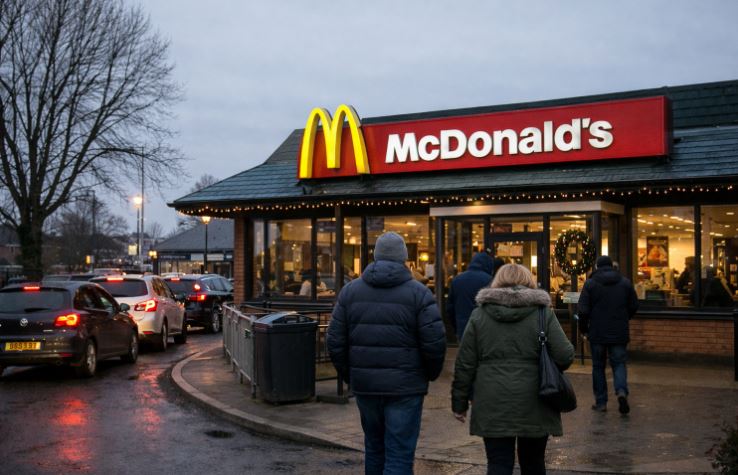

Is working at McDonald’s considered a blue collar job, or does it fall into a different employment category? In today’s ever-evolving job landscape, traditional labels like “blue collar” and “white collar” are often blurred, especially in service roles.
This article explores where McDonald’s jobs truly sit, examining the nature of the work, industry classification, pay, and how it compares to more traditional blue collar roles in the UK job market.
What Is a Blue Collar Job?

The term “blue collar” refers to occupations that involve manual labour, physical effort, and technical skills typically performed in environments such as construction sites, factories, or workshops.
These jobs are often characterised by the need for specialised tools, physical endurance, and hands-on work, and they are usually compensated on an hourly wage basis rather than a salary.
In the UK and around the world, blue collar roles are commonly found in industries like construction, manufacturing, maintenance, plumbing, electrical trades, and logistics. These roles often require vocational training or apprenticeships and can involve working outdoors or in industrial settings.
What differentiates blue collar work from other types is the nature of the work itself, manual, practical, and physically demanding, rather than its social status or income level.
What Kind of Work Do McDonald’s Employees Do?
McDonald’s employs people in a wide range of roles, but the most common positions are:
- Crew members (cashiers, cooks, customer service)
- Shift managers
- Maintenance workers
- Franchise owners and supervisors
The crew member position, often filled by students or those entering the workforce for the first time, involves:
- Operating fryers, grills, and drink machines
- Preparing food and drinks
- Interacting with customers at the counter or drive-thru
- Cleaning and maintaining the workspace
While the work can be physically demanding and involves repetitive tasks, it doesn’t typically require the use of heavy machinery or specialised tools, characteristics usually associated with traditional blue collar work.
Is McDonald’s a Blue Collar Job?

No, working at McDonald’s is not considered a blue collar job in the traditional sense. McDonald’s jobs, especially for crew members, are categorised under the service industry, not the manual labour sector. The key differences are:
| Aspect | Blue Collar Job | McDonald’s Crew Member |
| Industry | Construction, Manufacturing, Trades | Food & Beverage (Service Industry) |
| Nature of Work | Manual labour, machinery use | Customer service, food preparation |
| Pay | Hourly (typically higher due to skill) | Hourly (entry-level rates) |
| Work Environment | Outdoor or industrial | Indoor, fast-paced kitchen/restaurant |
| Skill Requirement | Trade certifications, hands-on training | On-the-job training, no formal qualification required |
So, while McDonald’s jobs involve physical effort, they do not involve the manual or industrial labour typically found in blue collar roles. Therefore, they are better described as service jobs.
Are McDonald’s Jobs Considered Part of the Service Industry?
Yes, very much so. McDonald’s is a quintessential example of the service sector at work. The company’s core function is to provide fast, consistent food service in a high-turnover environment. Employees are trained to prioritise speed, customer interaction, and cleanliness.
The service industry, as defined in economic terms, includes jobs that involve offering intangible products like experiences, entertainment, dining, and hospitality, rather than producing physical goods. In this context, fast food restaurants like McDonald’s serve as textbook cases.
While there’s a clear physical element to the job, such as cleaning, standing for long hours, and preparing food, the overarching purpose is customer service, not manual production. This firmly places McDonald’s roles outside the traditional blue collar bracket.
What About Franchise Owners – Are They White Collar?
In contrast to front-line workers, McDonald’s franchise owners operate firmly within the white collar classification.
Their roles are centred around business management, financial oversight, marketing, staffing, and operational strategy. These responsibilities are administrative and managerial in nature and do not involve the day-to-day physical tasks that crew members perform.
White collar work is often associated with office-based jobs that require a higher level of education or business acumen.
Franchise owners fit this profile as they handle decisions about staffing levels, customer satisfaction strategies, budgets, and compliance with food safety regulations.
Owning and operating a McDonald’s location is, therefore, a white collar profession, even though it is within the same brand as the more physically active crew roles.
How Does McDonald’s Compare with Traditional Blue Collar Employers?

Let’s compare McDonald’s with a known labour hire firm, Blue Collar People, to see how their roles and workplaces differ.
Company Comparison
| Category | Blue Collar People | McDonald’s |
| Industry | Labour Hire | Restaurants & Cafes |
| Revenue | Not available | Over $10B (AUD) |
| Employees | Not available | 10,000+ |
| Headquarters | Not available | Chicago, IL |
| Overall Rating | 4.0 | 3.4 |
| Compensation & Benefits | 2.9 | 3.1 |
| Management Rating | 3.2 | 3.9 |
| Salary Satisfaction | 75% | 41% |
While Blue Collar People focus on manual labour placements, McDonald’s focuses on service-based employment. The job roles and expectations vary significantly, even if both involve physical activity.
Does McDonald’s Offer the Same Job Security and Pay as Blue Collar Jobs?
When we look at employee feedback and salary data, McDonald’s appears to lag behind in terms of pay satisfaction and job consistency.
Salary Comparison
| Role | Blue Collar People | McDonald’s |
| Delivery Driver | $30.78/hr | $34.01/hr |
| Maintenance Person | $52.50/hr | $29.00/hr |
| Chef | $28.00/hr | $57,206/year |
Employee Feedback
- McDonald’s is often seen as a good first job or temporary work, especially for students.
- Staff mention friendly teams, but some complain about poor management and inconsistent hours.
- Only 41% of McDonald’s employees think they are paid fairly.
In contrast, Blue Collar People receive higher approval ratings and better job satisfaction among workers who value regular physical labour roles.
Is There a Grey Area Between Blue and White Collar Jobs?

Yes, and that’s where McDonald’s could fall. Terms like “grey collar” or “new collar” are used to describe roles that blend:
- Physical and customer service responsibilities
- Skills learned on the job
- Flexible education requirements
- Service work with structure and discipline
Fast food jobs like those at McDonald’s can be considered entry-level grey collar jobs. They don’t fit neatly into blue or white collar definitions but instead represent a new type of job shaped by today’s economy.
Conclusion: What Category Does McDonald’s Fall Into?
Based on industry classification, job responsibilities, training requirements, and employee feedback, McDonald’s crew member roles are not considered blue collar jobs.
They are best described as service industry positions, characterised by customer interaction, food service, and fast-paced environments.
However, roles higher up the chain, like franchise owners and managers, fall into the white collar category due to their administrative and leadership duties.
In essence, McDonald’s represents a modern employment landscape where traditional labels don’t always apply. It may not be blue collar, but it offers thousands of entry-level opportunities and valuable work experience for those entering the workforce.
FAQs About McDonald’s and Job Classifications
What defines a blue collar job in the UK?
A blue collar job in the UK typically involves physical labour, trade skills, or technical work in industries such as construction, manufacturing, or transport.
Is fast food work considered manual labour?
Fast food work involves physical effort but is not considered manual labour in the traditional sense, as it lacks the skilled trade component.
Can a McDonald’s crew role lead to a blue collar career?
While McDonald’s itself isn’t blue collar, the work experience can develop soft skills that are valuable in any industry, including blue collar sectors.
Do McDonald’s managers perform white collar work?
Yes, managers handle administrative tasks, scheduling, team management, and performance reporting, aligning them with white collar classifications.
How consistent are shifts at McDonald’s?
Shift consistency can vary. Some employees report stable hours, while others face fluctuations depending on staffing needs and seasonal demand.
What makes franchise ownership a white collar role?
Franchise owners manage business operations, financial planning, and legal compliance, all hallmarks of white collar professions.
Is McDonald’s a good place to start your career?
Yes, especially for young workers. It offers foundational training, discipline, teamwork, and customer service experience.